What Is Branding?
.avif)
WHAT IS BRANDING?
Branding is a term that is constantly used and rarely explained well. Ask five people what branding is and you’ll probably get five completely different answers. A logo. A colour palette. Marketing. Advertising. A nice typeface. Or something involving a mission statement and three hours of moving Post-its around.
Those things are part of branding. But none of them, on its own, is branding. The confusion usually arises because three things get mixed up: the product, the brand and branding. They are closely connected, but they are not the same. So before we look at what branding is, it helps to get those basics straight first.
And as far as I’m concerned, there is no better way to explain the difference than by using the simplest product there is: water.
WHAT IS A PRODUCT?
Let’s start with the thing being sold. A product does not have to be a physical object. It can just as easily be a service, an experience or an idea.
At its core, a product is what is being offered. That could be a pair of shoes, a hotel room, a software subscription, a haircut, a festival ticket or a bottle of water.Water is everywhere. It falls from the sky. It comes out of the tap. And every human being needs it to survive. Yet in every supermarket, you’ll find an entire shelf of companies trying to sell it to you at completely different prices.
One bottle might cost less than a euro. Another might cost five times as much. Put it in a hotel minibar and things quickly become even more absurd. The product is still water. Clear, wet and not exactly blessed with a distinct personality of its own.
So why does someone choose one bottle over another?
.avif)
“A brand is a name, term, design, symbol, or any other feature that identifies one seller’s good or service as distinct from those of other sellers.”
...Technically, that’s correct. But there is more to it. A brand is not simply the logo on the bottle. It is everything that logo has come to represent. It is the collection of associations, expectations and feelings that people connect to a company or product. Some are practical. Others are emotional. Most are a mixture of both.
Products are often easy to copy. Features can be matched. Prices can be undercut. A competitor could launch something next week that looks suspiciously similar to what you are selling. What is much harder to copy is the position you occupy in someone’s mind.
Take five water brands that, broadly speaking, sell the same thing.
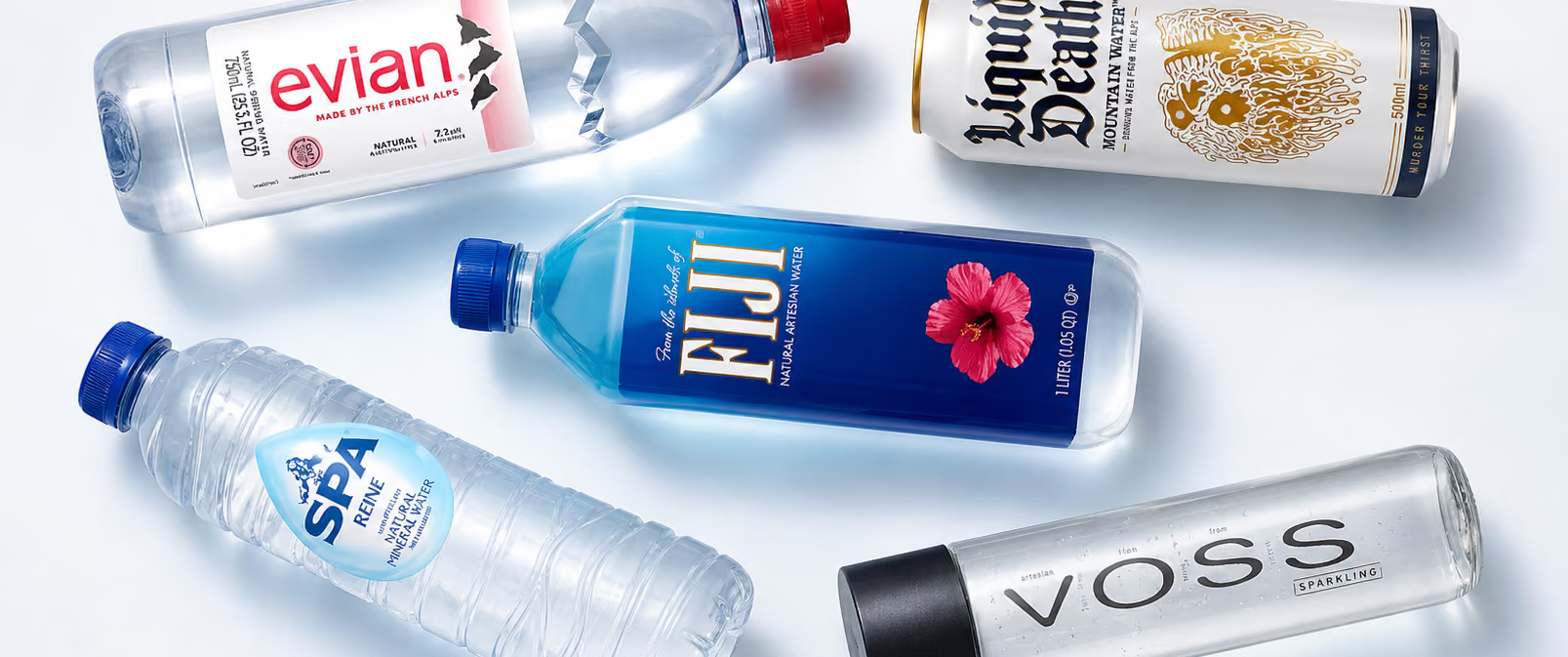
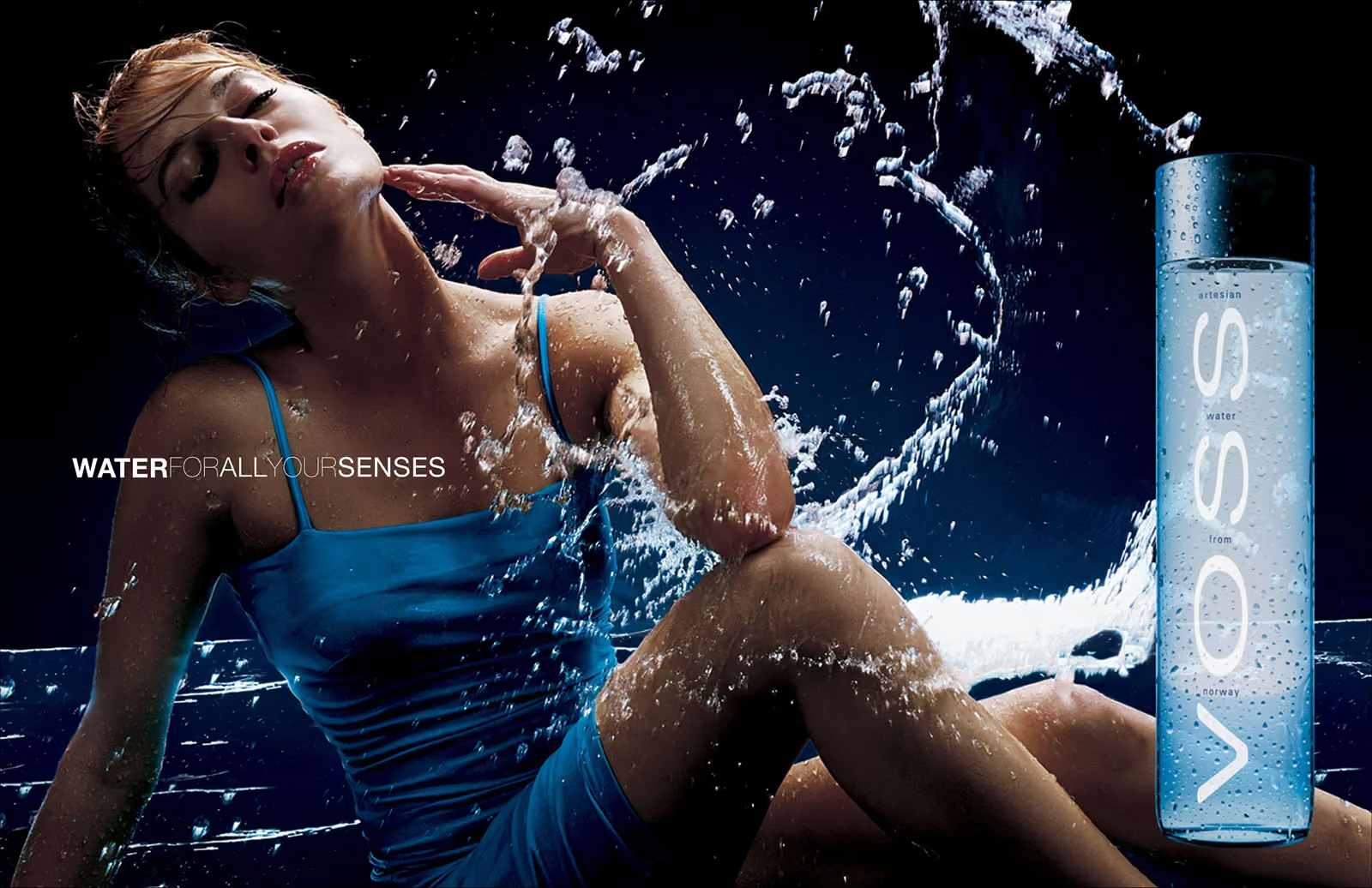
VOSS
Turns water into a design object. The tall cylindrical bottle, Scandinavian associations and premium presentation make it feel closer to something you order at a beautiful restaurant than something you grab because you are thirsty. The water is the product. Elegance and status are part of the brand.
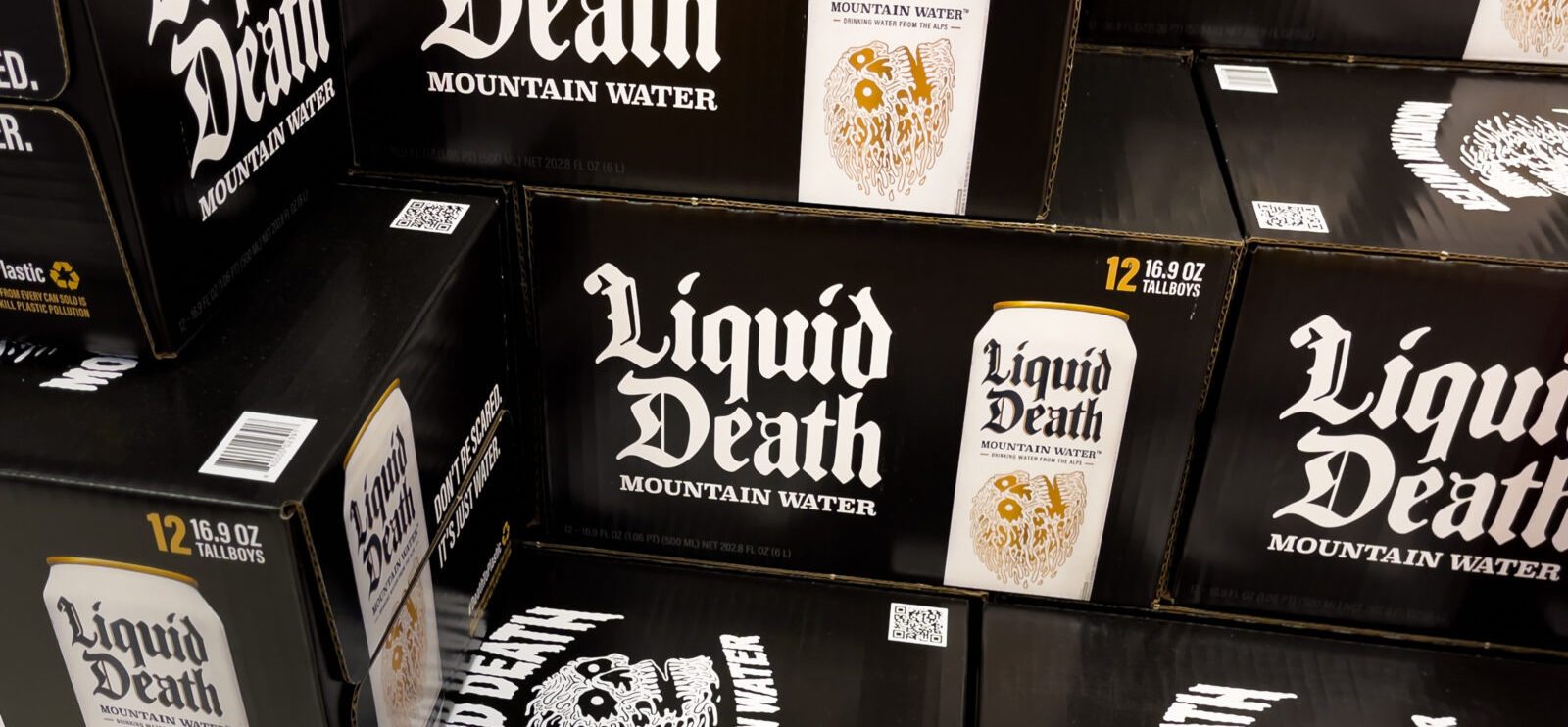
LIQUID DEATH
Looked at an industry full of mountains, waterfalls and pale blue labels and apparently decided it needed more skulls. It packages mountain water in tall aluminium cans and communicates more like a punk band or beer company than a traditional water brand. Same basic human need. Completely different cultural meaning.
SPA
Owns purity. Its communication centres on naturally filtered, mineral poor water and the protected environment around Spa. The brand feels clean, familiar and straightforward.
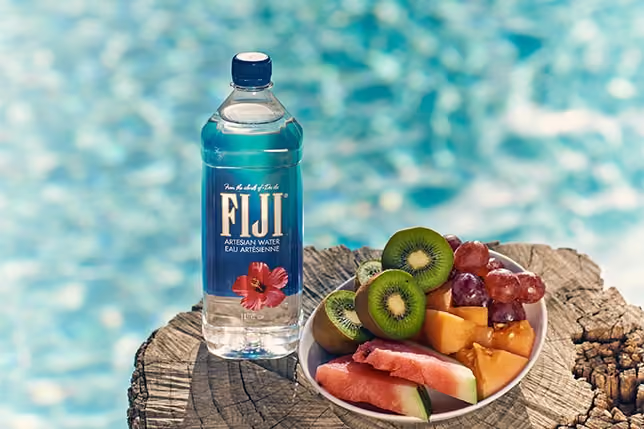
Fiji
Transports you somewhere else entirely. Tropical imagery, the distinctive square bottle and its story of an artesian aquifer in Fiji create ideas of remoteness, nature and exclusivity. The product comes from water. The value comes from the story wrapped around it.
EVIAN
Has spent years connecting water with youthfulness, vitality and a certain optimistic lightness. Evian built a world around feeling young.

SO WHAT'S BRANDING?
As Kotler and Keller said: “Branding is endowing products and services with the power of a brand.” In less textbooky language: branding is the work that gives something meaning.
It is the process of shaping how a company, product or service is understood and remembered. You define what you stand for, what you do not stand for, how you look, how you speak and what people should experience time and again whenever they come into contact with you.
Branding also helps answer the question: “Why you?” Why this bottle of water and not the one next to it? Why this agency and not another? Why this university, this restaurant, this software platform, this architecture firm or this pair of trainers?
Liquid Death did not invent water. VOSS did not invent luxury water. FIJI did not discover that tropical islands are rather beautiful. Each of them built its own world around a product that would otherwise be easily interchangeable. That is what strong branding does. It gives people something to recognise, understand and ultimately choose.
A VISUAL IDENTITY?
A visual identity, is an important part of your branding. It makes you recognisable and gives visible form to what your organisation stands for. A new logo, colour palette or website can make a real difference, especially when those choices align with the story behind them.
But imagine Liquid Death with the visual identity of SPA. Or VOSS with the tone and attitude of Liquid Death. The product would still work perfectly well, but the whole thing would no longer feel right. That is precisely what shows that branding encompasses much more than design alone.
Good branding brings together what a company wants to stand for, what it says and what people actually experience. The visual identity gives that story a recognisable form.
WHO DOES BRANDING AFFECT?
The most obvious answer is: customers. When people can choose from several similar options, branding makes that choice easier. You probably do not spend more than thirty seconds comparing bottles of water in the supermarket. Instead, you recognise a brand or trust it. Perhaps the bottle appeals to you, or you have bought the product before.
But customers are only part of the story. A strong brand also influences the people who work for a company, invest in it, supply it, recommend it or collaborate with it. Because people (and, shocker, that is what they are) like to connect with organisations they understand and identify with.
A clear brand shows who an organisation is and who it is not. That clarity attracts people who are a good fit and helps others recognise when they are not. That can only be a good thing, because a brand that tries to appeal to everyone will ultimately mean very little.
HOW IS A BRAND BUILT?
A visual identity, is an important part of your branding. It makes you recognisable and gives visible form to what your organisation stands for. A new logo, colour palette or website can make a real difference, especially when those choices align with the story behind them.
But imagine Liquid Death with the visual identity of SPA. Or VOSS with the tone and attitude of Liquid Death. The product would still work perfectly well, but the whole thing would no longer feel right. That is precisely what shows that branding encompasses much more than design alone.
Good branding brings together what a company wants to stand for, what it says and what people actually experience. The visual identity gives that story a recognisable form.
“A brand is the meaning people attach to what you do. Branding is how you intentionally shape that meaning”